
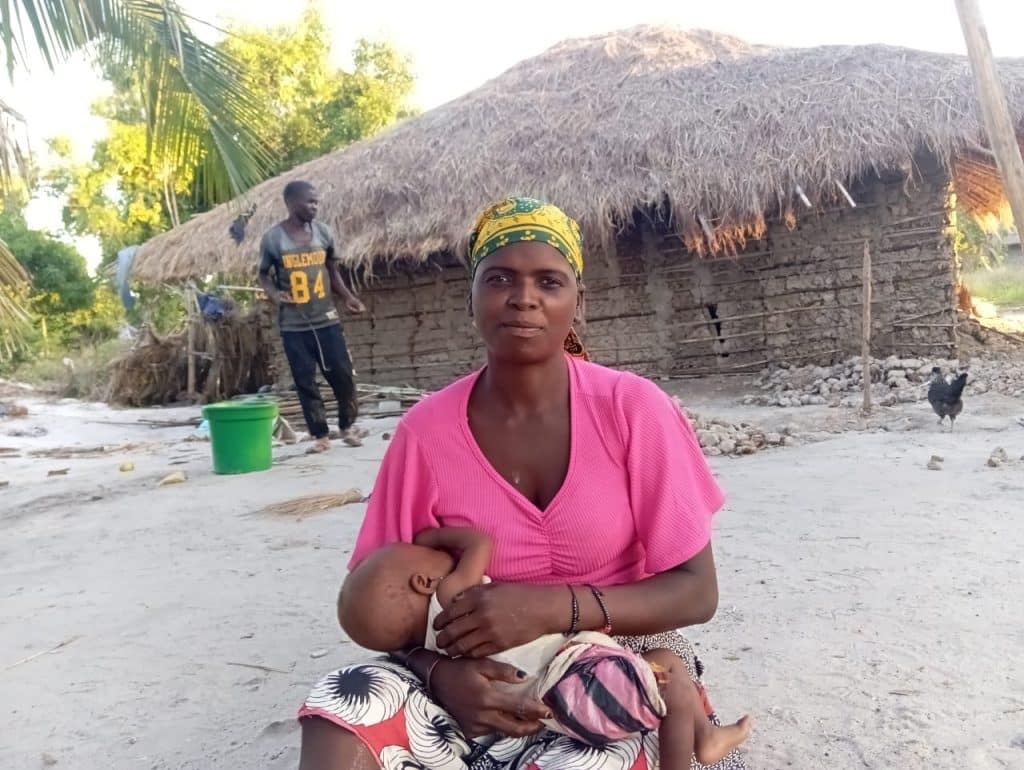
In many coastal communities, far from large urban centers and formal employment opportunities, life is built slowly, day by day, through effort, creativity, and hope. In these places, where resources are scarce and options are limited, women often carry the responsibility of holding families together. They face constant hardships and yet continue forward with a quiet strength that often goes unseen. It is within this context that the story of this young Rapiapirro woman unfolds.
She is 25 years old and the mother of three young children, who depend entirely on her for survival. She is not married and currently lives in her parents’ home, where she returned after experiencing difficult moments in her life. Returning to her family home was not an easy choice, but it became necessary to ensure shelter, safety, and some level of support while raising her children. The house is simple, with limited resources, but it represents protection and a chance to begin again.
Instability is a constant presence in her daily life. She does not have a fixed job or a stable source of income. The lack of employment opportunities in her community makes the future uncertain and unpredictable. Even so, she refuses to remain idle or fully dependent on others. Each day, she searches for ways to provide for her children, even when the options are few.
Often, she walks to the beach to fish, leaving early and facing the sun, physical exhaustion, and the uncertainty of returning with anything at all. The sea is not always generous. Some days she comes back with very little, and on others with nothing. Still, she persists, because every attempt carries the possibility of food on the table and another day survived.
When fishing brings no results, she turns to other survival strategies. She collects mangoes and sells what she can, adapting to circumstances and making use of what nature provides. The earnings are small and often insufficient, but they are essential to cover basic needs. Every sale, no matter how modest, means rice, flour, or food for her children.
While struggling to survive in the present, she keeps her eyes fixed on the future. She continues waiting for job opportunities, believing that decent work could transform her life and bring stability. Deep within her lives a persistent dream: to start her own small business. She imagines herself making and selling fritters and badjias, gradually building an income that would allow her to care for her children with greater security and independence.
She also nurtures the deep desire to have a home of her own. A simple place, but one that belongs to her, where her children can grow up with dignity and peace. To her, success in life does not mean wealth or luxury, but the ability to support her family, educate her children, and live without the constant fear of scarcity.
This is the story of a young Rapiapirro woman who, despite hardship and instability, continues forward with courage, resilience, and hope. A story of quiet resistance, built day by day through informal work, unconditional love for her children, and a firm belief that, even amid adversity, better days can still come.