
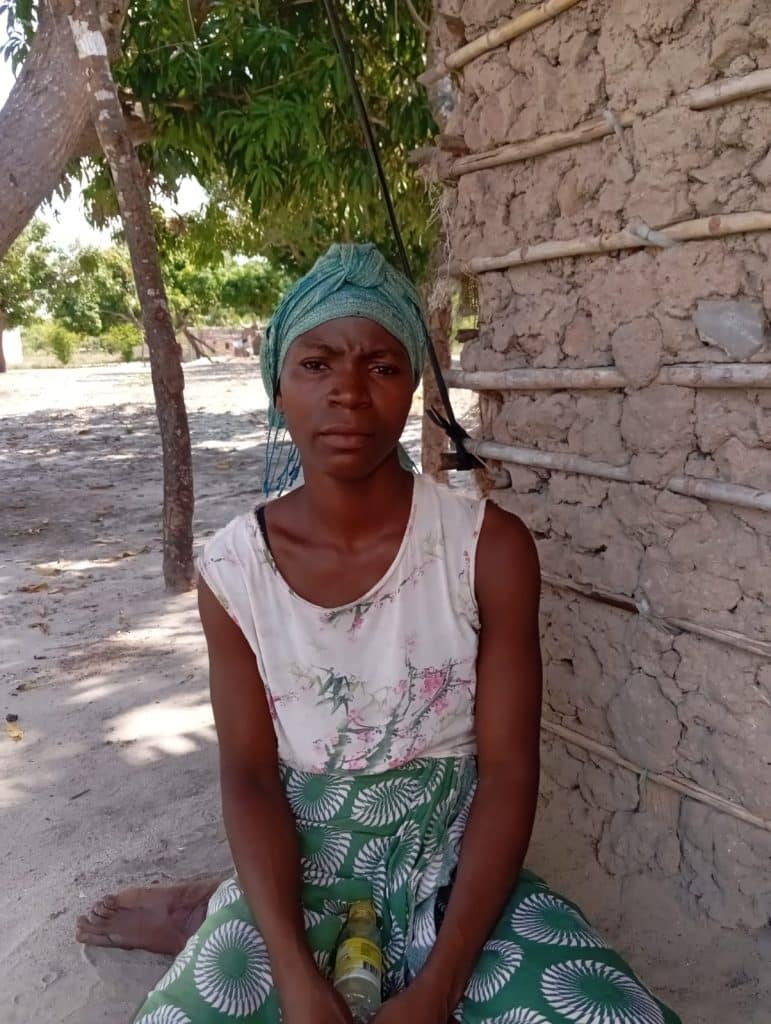
Ima Morceu Story: Young Mother Seeking Opportunities to Support Her Family
Ima Morceu is only 23 years old, yet her life is already shaped by responsibility, sacrifice, and resilience. She is a young married woman and the mother of five small children. In her community, opportunities for women are extremely limited, and Ima’s daily life reflects the harsh reality faced by many young mothers who struggle to provide for their families with little support and few resources.
At present, Ima does not have a formal job, nor does she run a small business. This is not because she lacks motivation, ambition, or skills. Instead, the absence of employment opportunities and access to capital has left her without a stable source of income. Like many women in her situation, Ima wants to work, to earn her own money, and to contribute meaningfully to her household, but the path forward remains blocked by poverty and structural barriers.
Her husband works in the salt pans, a job known for being physically demanding, unstable, and poorly paid. The income he earns is unpredictable and often insufficient to cover basic needs such as food, clothing, healthcare, and school supplies for their children. When his wages fall short, the burden of survival weighs heavily on Ima as well.
To help support her family, Ima often goes to the beach in search of fish or other resources she can bring home. This work is informal, exhausting, and uncertain. Many people depend on the same beach for survival, arriving early in the morning and staying until nightfall. Because of the competition, there are many days when Ima finds nothing at all. On those days, she returns home empty-handed, facing the painful reality of not being able to provide food for her children.
Despite these daily struggles, Ima Morceu has not lost her sense of hope or her vision for a better future. She has dreams—clear, practical, and rooted in dignity. One of her greatest aspirations is to start her own small business. She dreams of selling clothes, opening a small food shop, or running a modest stall that would allow her to earn a steady income. To Ima, entrepreneurship is not about wealth; it is about stability, independence, and the ability to care for her children with confidence.
Owning a small business would mean more than just money. It would mean freedom from daily uncertainty, the ability to plan ahead, and the chance to give her children a better quality of life. It would allow her to contribute to her community and to serve as a role model for other young women who face similar challenges.
Unfortunately, these dreams remain out of reach for now. Ima lacks access to startup capital, vocational training, mentorship, and institutional support. There are no microloans available to her, no business development programs in her area, and no safety nets to help her take the first step. Like many women living in poverty, she is caught in a cycle where ambition exists, but opportunity does not.
Education was once a possible path forward for Ima, but that door closed too soon. She attended school but was unable to complete her studies due to family responsibilities, financial hardship, and the absence of support systems. While education remains important to her, survival has always come first. Even so, she still believes that learning, skills training, or community support could one day help her improve her situation.
Ima continues to search for opportunities wherever she can find them. She listens, asks questions, and remains open to any chance that could help her change her circumstances. Her perseverance reflects the reality of countless young women whose lives are defined by unpaid labor, invisible struggle, and untapped potential.
The story of Ima Morceu is not unique, but it is deeply important. It highlights the intersection of poverty, gender inequality, and limited economic opportunity. It reminds us that many women do not need charity—they need access: access to education, access to capital, access to markets, and access to dignity through work.
Ima Morceu’s life is a story of resilience, courage, and determination. She represents a generation of young mothers who are willing to work, to dream, and to build a better future if given the chance. Her story calls attention to the urgent need for inclusive economic opportunities and community-based solutions that empower women to support their families and transform their lives.