
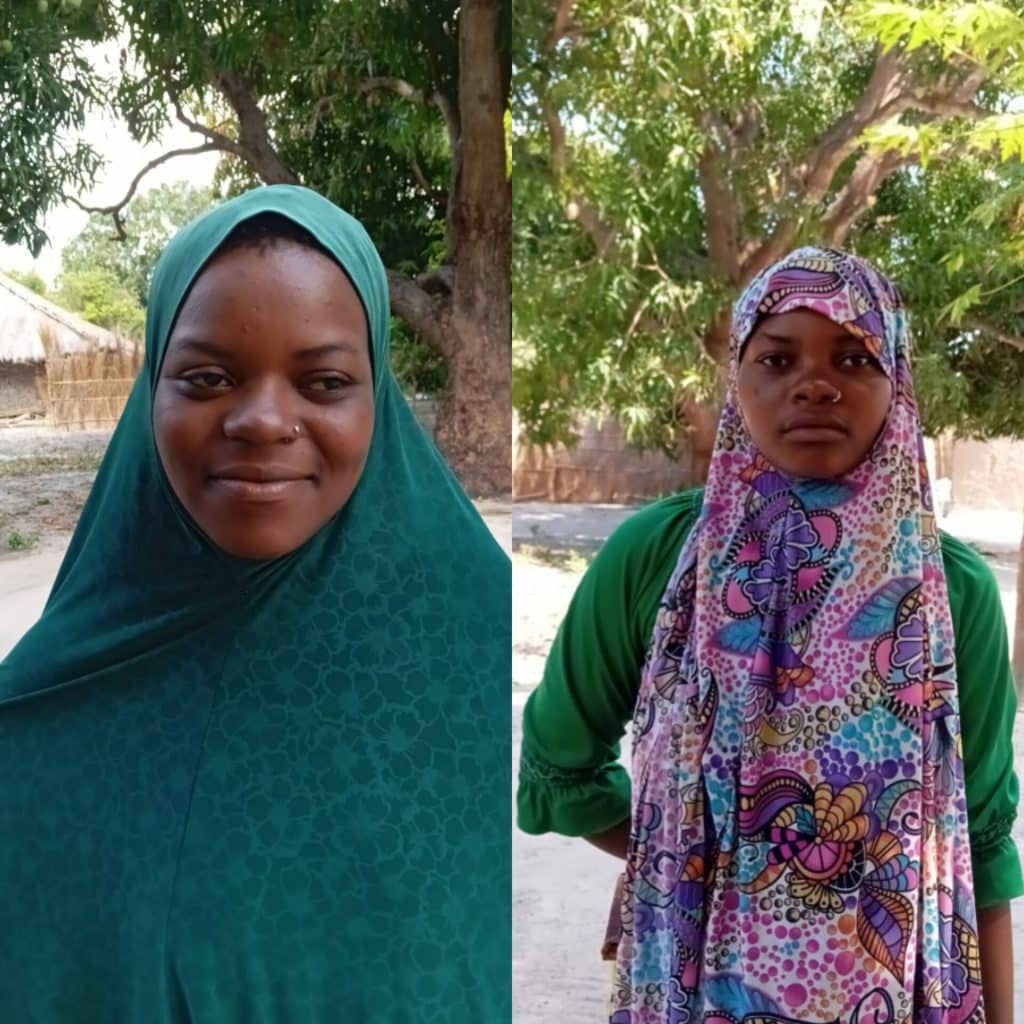
The Story of Hermelita Martinho and Fátima Martinho: Two Sisters, Young Mothers, Waiting for Opportunity
Hermelita Martinho and Fátima Martinho are two young sisters living on the island who face daily struggles related to poverty, early motherhood, and the lack of employment opportunities. Despite their young ages, both carry heavy responsibilities and dreams that are still waiting for a chance to become reality.
Fátima Martinho is the older sister. She was born in 2004 and is only 21 years old, yet she is already a mother of three children. Her younger sister, Hermelita Martinho, was born in 2006, is 19 years old, and has two children. Neither of the sisters was born on the island. They are originally from Namapa, where they spent their early childhood years.
Their mother is originally from the island, while their father still lives in Namapa. In 2014, Hermelita and Fátima moved permanently from Namapa to the island with their family. Since that time, they have not returned to Namapa. It was on the island that both sisters grew into adulthood, got married, and began raising their families under difficult economic conditions.
The sisters’ reality is shaped by informal and unstable livelihoods. Hermelita Martinho makes efforts to generate income whenever possible. She does not engage in fishing, but during mango season she buys mangoes and resells them at the local market. In addition, she produces and sells homemade cooking oil, a labor-intensive activity that provides only limited financial return. Even with these efforts, the income is irregular and insufficient to meet the needs of her children.
Despite the hardship, Hermelita has clear goals for the future. One of her greatest dreams is to open her own small shop, where she would sell clothing, especially capulana fabrics, which are widely used and valued in the community. Owning a shop would represent independence, stability, and the opportunity to build a better life for her children.
Fátima Martinho, on the other hand, has never managed to start a business of her own. She has no experience in trade and currently does not engage in any income-generating activity. The lack of education, startup capital, and access to opportunities makes it difficult for her to take the first step. Even so, she remains hopeful that one day an opportunity will arise, even if it is a small or informal job, such as selling goods by the roadside or doing domestic work.
Both sisters live in a context where unemployment is widespread and opportunities are extremely limited, especially for young women with children. Early motherhood, financial insecurity, and the absence of stable employment make daily survival a constant challenge. Still, Hermelita and Fátima continue to wait patiently for an opportunity that could change the course of their lives.
The story of the Martinho sisters reflects the reality of many young women who want to work, support their families, and become financially independent, but face systemic barriers such as poverty, unemployment, and social exclusion. They are not asking for charity, but for a fair chance to work, learn, and build a future with dignity.