
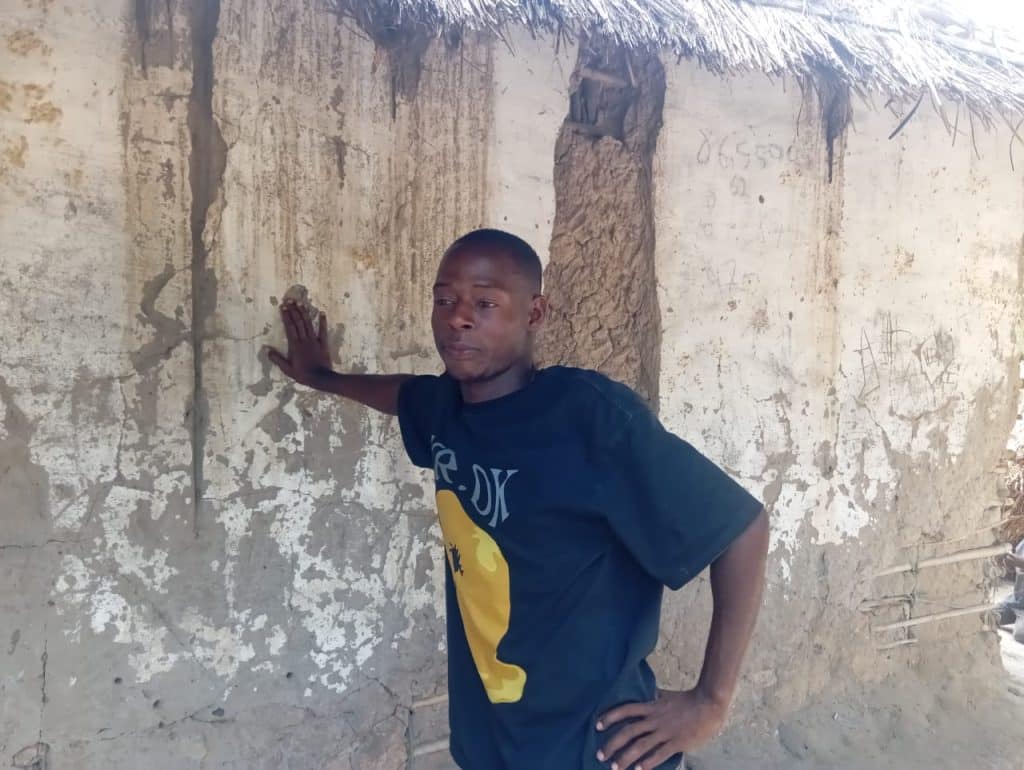
The Story of Salimo Arune: Youth, Work, and the Struggle for Dignity on Mozambique Island
Salimo Arune is only 25 years old, yet he already carries significant responsibilities. He is married and the father of a young daughter, and every day he faces the challenge of providing for his family in an environment where job opportunities are extremely limited. Born and raised on Mozambique Island, Salimo has deep roots in the community. It is where he grew up, learned the value of hard work, and developed practical skills that could support his family—if fair opportunities were available.
At present, Salimo does not have a permanent job. His living conditions and lack of financial resources make it difficult for him to secure stable employment. Despite these challenges, he has never stopped searching for work. Whenever he hears about a possible opportunity, he makes the effort to pursue it, hoping it might become the turning point that allows him to improve his family’s living conditions.
On one occasion, Salimo went to a salt production site (salina) to look for work. Salt flats are among the few remaining sources of informal employment in the region. However, when he arrived, he was told that he would need to pay approximately 3,000 meticais just to gain access to the job. For someone who struggles daily to meet basic needs, this amount was impossible to afford. Salimo reflected that if he had that money, he could invest it in something meaningful—such as starting a small business, opening a modest shop, or purchasing tools to work independently.
Because of this barrier, Salimo decided not to proceed with the job at the salina. What should have been an opportunity instead became another obstacle. Since then, he has continued to look for employment, but the lack of capital, connections, and institutional support has made this search extremely difficult.
Despite these hardships, Salimo has valuable skills. He knows how to build houses, paint structures, and perform general construction work. These are practical abilities that could provide a stable income if there were projects, community initiatives, or employment programs available. Salimo makes it clear that he is willing to do any honest work. Even tasks such as street cleaning or basic labor would be accepted with dignity if they allowed him to support his wife and daughter.
Salimo Arune’s story reflects the reality of many young people on Mozambique Island—individuals who are capable, motivated, and eager to work, yet trapped in a cycle of poverty due to limited access to opportunities. His situation is not the result of laziness or lack of effort, but rather systemic economic exclusion and the absence of support for young workers and small entrepreneurs.
Salimo is not asking for charity. He is asking for a fair chance. He wants to work, to grow, and to secure a better future for his child. Until that opportunity arrives, he remains patient and hopeful, holding onto his dignity and his determination to keep searching for a path toward stability and self-reliance.