
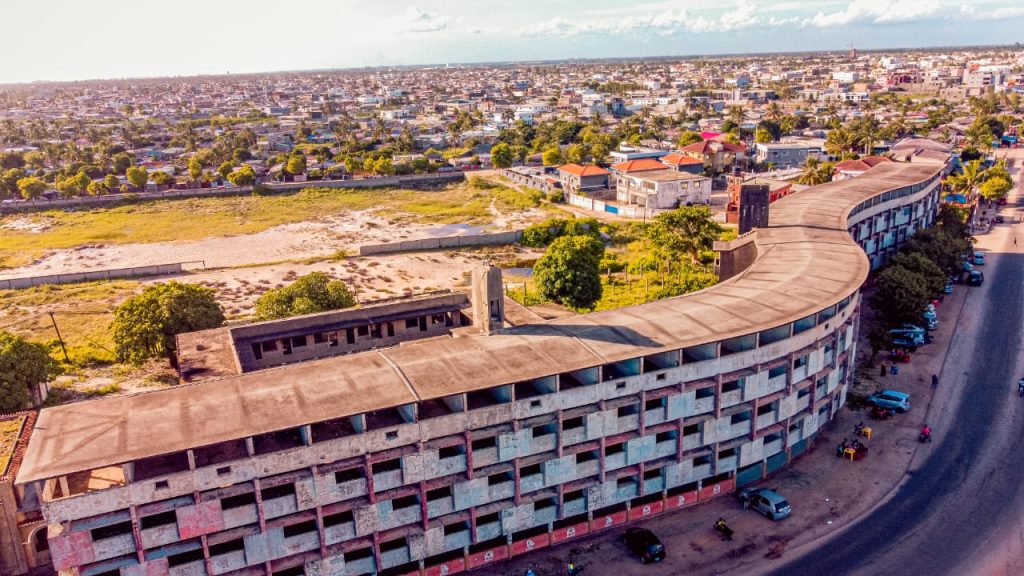
The Hotel of Estoril, located in the city of Beira, Mozambique, is much more than just a building; it is a silent testament to the country’s turbulent history. Inaugurated in the 1950s during the colonial period, the hotel was a symbol of glamour and sophistication. It was frequented by expatriates, diplomats, and tourists, and its imposing architecture and privileged location by the sea made it a popular destination. It was the place where the elite gathered, creating an aura of prestige that extended throughout the city.
However, over time, the Hotel de Estoril became one of the many victims of the historical upheaval that marked Mozambique. Independence in 1975 and the subsequent civil war that devastated the country left deep scars on its infrastructure, and the hotel was not spared from abandonment. What was once a symbol of opulence is now a ruin, with walls that bear the scars of a time of great turmoil.
Even in its deteriorated state, the hotel still holds stories of an era long gone, and its decay reflects the radical transformation that Mozambique underwent, from colonialism to the conflicts that followed. Today, the ruinous building, located beside a beach, is a point of interest for curious visitors, offering a unique glimpse into the splendor of a past time.
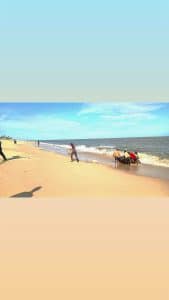
While the Hotel de Estoril holds the memories of lost glamour, life in the city continues, and along the coast, a very different reality unfolds every day. On the shores of the sea, many people struggle for survival. Fishermen go out daily to the waters, challenging the uncertainties of the sea in search of a good catch to sell. However, luck is not always on their side. Some days, the fishing is abundant, and the fish are enough to meet everyone’s needs. But on other days, the nets return empty, leaving the fishermen and, consequently, the families who depend on their sales in silent despair.
On the opposite side of the beach, the “mamanas” — women who buy fish to resell — wait patiently. They are the link between the sea and the local markets, but their work is equally demanding. On many days, there are more mamanas than fish, and competition is fierce. Not everyone manages to acquire the fish they need to ensure daily sustenance. When fishing is scarce, the cycle of hardships becomes even more evident. The struggle for survival is constant and relentless.
Families, often with no alternative, leave their homes every day to try to find a way to support themselves. Staying home is not an option, as the weight of responsibilities is heavy. Each day is a battle for survival, and in the midst of this struggle, the Hotel de Estoril, with its once-bright shine now faded, serves as a reminder that, both in the past and in the present, Mozambique remains a place of resilience, transformation, and above all, hope.